
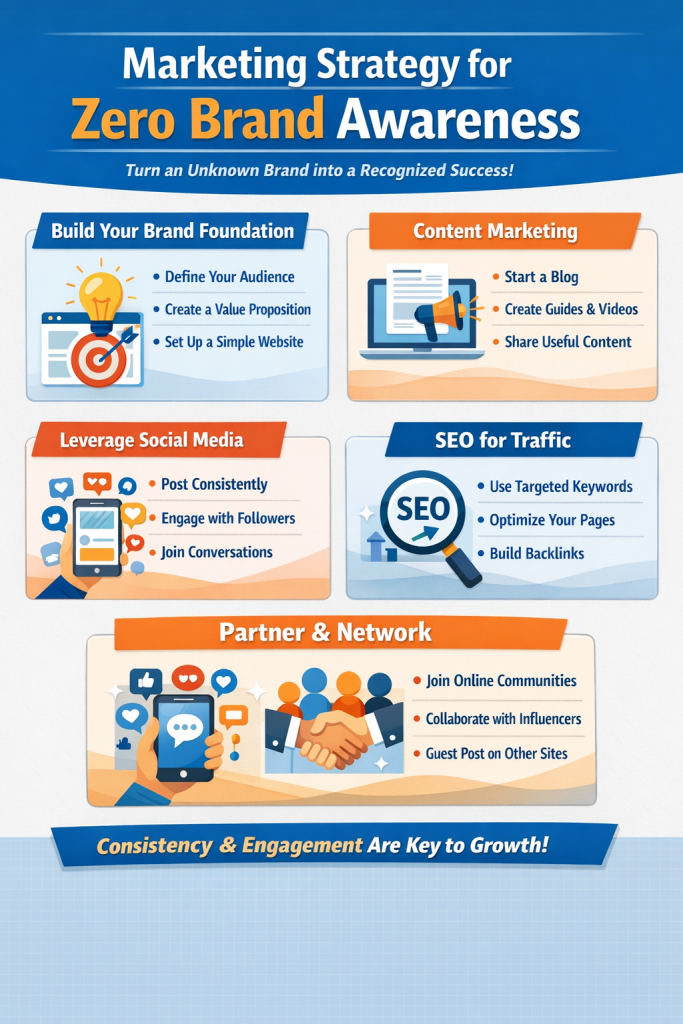
The Challenge of Marketing With Zero Brand Awareness
Launching a new business or personal brand often begins with a major challenge: nobody knows who you are. When there is no recognition, even great products or services can struggle to gain attention. This is exactly why building a Marketing Strategy for Zero Brand Awareness is essential for startups, new websites, and emerging brands that want to grow online.
At the beginning stage, marketing is not about aggressive selling. Instead, it is about creating visibility, building trust, and introducing your brand to the right audience. A clear marketing strategy allows businesses to move from being completely unknown to gradually becoming recognizable within their industry.
A well-planned Marketing Strategy for Zero Brand Awareness combines multiple approaches such as content marketing, social media engagement, search engine optimization, and community participation. These methods work together to create awareness and attract the first group of customers who will eventually help spread your brand further.
In this guide, you will learn how to build a powerful marketing strategy from scratch, even if your brand currently has zero visibility. The goal is to create sustainable growth by using beginner-friendly techniques that deliver long-term results.
1. Why Brands Start with Zero Awareness
Every successful company started from a stage where nobody knew about them. Whether it is a small startup, a personal brand, or a new online store, the beginning phase always involves building recognition from the ground up. Understanding this stage helps businesses focus on growth rather than expecting immediate popularity.
When a brand first launches, it typically lacks an audience, website traffic, customer trust, and social media followers. These limitations make it difficult to compete with established companies that already have a strong presence. However, this challenge is normal and can be overcome with a well-structured Marketing Strategy for Zero Brand Awareness.
Early marketing efforts should focus on visibility rather than direct sales. When people begin seeing your content, reading your articles, or interacting with your social media posts, they slowly become familiar with your brand. Over time, familiarity leads to trust, and trust eventually leads to conversions and customers.
Understanding that brand awareness grows gradually helps business owners stay consistent with their marketing efforts. Instead of expecting immediate results, they can focus on building long-term recognition.
2. Build a Strong Brand Foundation
Before promoting a business, it is important to create a strong brand foundation. Without a clear identity and direction, marketing campaigns may fail to connect with the intended audience. A strong foundation ensures that every marketing effort communicates the same message and value.
1. Define Your Target Audience
One of the most important steps in building a marketing strategy is identifying who your audience is. Marketing becomes far more effective when it is directed toward a specific group of people who are most likely to benefit from your product or service. Understanding the needs, challenges, and interests of your audience allows you to create content and campaigns that resonate with them.
For example, a brand targeting small business owners will use different messaging compared to a brand targeting college students. By clearly defining your audience, your Marketing Strategy for Zero Brand Awareness becomes more focused and efficient.
2. Create a Clear Value Proposition
Your value proposition explains why people should choose your brand over competitors. It highlights the unique benefits that your product or service provides and communicates how it solves a specific problem. A strong value proposition makes it easier for potential customers to understand what makes your brand special.
When people discover your brand for the first time, they should quickly understand the value you offer. This clarity improves engagement and helps build credibility, especially when your brand is still new.
3. Build a Simple Website
Even in the era of social media, having a website is essential for establishing credibility. A website acts as the central hub where potential customers can learn more about your brand, read helpful content, and explore your products or services.
A beginner-friendly website should include a homepage that introduces your brand, an about page that tells your story, a blog section for valuable content, and a contact page where visitors can easily reach you. These elements provide a professional presence that supports your Marketing Strategy for Zero Brand Awareness.
For learning more about search optimization fundamentals, you can explore this guide from Google:
https://developers.google.com/search/docs
3. Content Marketing to Gain First Visibility
Content marketing plays a critical role in building awareness when a brand is still unknown. Instead of promoting products aggressively, content marketing focuses on providing useful information that attracts potential customers naturally.
1. Start a Blog
Starting a blog is one of the most effective ways to build visibility online. When businesses publish helpful articles related to their niche, they create opportunities for people to discover their brand through search engines. Educational blog posts that answer common questions often rank in search results and bring consistent traffic over time.
For example, a digital marketing brand might publish guides about SEO, social media strategies, or online advertising tips. Each article acts as a doorway through which new visitors can discover the brand.
2. Create Educational Content
Educational content builds trust much faster than promotional material. When businesses share valuable insights, tips, or tutorials, they position themselves as helpful experts within their industry. People are more likely to remember and trust brands that provide useful knowledge rather than constant advertisements.
Educational content can include beginner guides, step-by-step tutorials, industry insights, or detailed explanations of common problems. These types of content strengthen the effectiveness of a Marketing Strategy for Zero Brand Awareness because they attract people who are actively looking for information.
3. Repurpose Content
Creating new content regularly can be challenging, especially for small teams or individual creators. Repurposing content allows businesses to maximize the value of existing material. A single blog article can be transformed into multiple formats such as social media posts, short videos, or visual infographics.
This strategy helps extend the reach of your content and ensures that your marketing efforts remain consistent across different platforms.
4. Social Media Strategy for New Brands
Social media platforms provide one of the fastest ways to build brand awareness. When used strategically, they allow businesses to connect directly with audiences and share valuable content that increases visibility.
1. Choose the Right Platforms
New brands often make the mistake of trying to be present on every social media platform. Instead, it is more effective to focus on platforms where the target audience is most active. For example, professional services may benefit from LinkedIn, while visually driven brands may find better engagement on Instagram or YouTube.
Focusing on the right platform ensures that your Marketing Strategy for Zero Brand Awareness reaches the people who are most likely to engage with your content.
2. Post Consistently
Consistency is a key factor in social media growth. When brands post regularly, they remain visible to their audience and increase their chances of appearing in platform algorithms. Consistent posting also signals reliability and professionalism.
Over time, regular posts help build familiarity with your brand. As more people see your content, they become more comfortable interacting with it.
3. Engage with Your Audience
Social media is not only about publishing content. Engagement plays a significant role in building relationships with followers. Responding to comments, answering questions, and participating in conversations create a sense of connection between the brand and its audience.
These interactions help transform casual viewers into loyal followers who are more likely to recommend your brand to others.
5. SEO Strategy for Long-Term Traffic
Search engine optimization is a powerful component of any Marketing Strategy for Zero Brand Awareness because it allows new brands to appear in search results when users look for information online.
1. Target Low-Competition Keywords
New websites should initially focus on long-tail keywords or search phrases that have lower competition. These keywords are easier to rank for and often attract highly targeted visitors who are looking for specific information.
By gradually ranking for these keywords, a new brand can begin generating organic traffic without spending money on advertisements.
2. Optimize On-Page SEO
On-page optimization helps search engines understand what your content is about. This includes placing the focus keyword in the title, headings, introduction, and throughout the article naturally. Proper meta descriptions, internal links, and optimized images also contribute to better rankings.
These improvements strengthen the overall effectiveness of a Marketing Strategy for Zero Brand Awareness.
3. Build Backlinks
Backlinks act as signals of credibility for search engines. When reputable websites link to your content, it indicates that your information is valuable and trustworthy. As a result, search engines may rank your pages higher.
Learning the basics of backlinks and SEO strategies can help improve your marketing results. A helpful resource is the beginner SEO guide available at:
https://moz.com/beginners-guide-to-seo
6. Leveraging Communities and Partnerships
Communities and collaborations can accelerate the growth of a new brand. When businesses connect with existing audiences, they gain exposure that would otherwise take much longer to achieve.
1. Join Online Communities
Participating in online communities allows brands to interact with people who share similar interests. Forums, discussion groups, and professional networks provide opportunities to answer questions, share insights, and contribute valuable advice.
Over time, consistent participation helps people recognize your brand and associate it with helpful expertise.
2. Collaborate with Micro-Influencers
Micro-influencers often have smaller audiences compared to large influencers, but their followers tend to be highly engaged. Collaborating with micro-influencers can introduce your brand to a relevant audience that trusts the influencer’s recommendations.
These partnerships can significantly support a Marketing Strategy for Zero Brand Awareness by expanding your reach to new communities.
3. Guest Content Opportunities
Publishing guest articles or appearing on podcasts allows brands to share their expertise with new audiences. These opportunities not only increase exposure but also build credibility and authority within the industry.
Guest contributions also help generate backlinks, which further support SEO growth.
7. Measuring and Improving Your Marketing Strategy
Tracking performance is essential for improving marketing results. By analyzing data, businesses can understand which strategies are working and which areas require improvement.
1. Track Website Traffic
Website analytics tools provide valuable insights into visitor behavior. They reveal how many people visit your website, where they come from, and which pages they spend the most time on. These insights help businesses identify successful content topics.
2. Monitor Social Media Metrics
Social media platforms provide analytics that track engagement, impressions, and audience growth. Monitoring these metrics helps determine what type of content resonates most with your audience.
3. Improve Based on Data
Successful marketing strategies evolve over time. When businesses analyze data and adjust their approach accordingly, they improve their chances of achieving sustainable growth. Continuous optimization ensures that the Marketing Strategy for Zero Brand Awareness becomes more effective with each iteration.
FAQs:
1. What is a Marketing Strategy for Zero Brand Awareness?
A Marketing Strategy for Zero Brand Awareness is a structured plan that helps new businesses build visibility and recognition when their brand is completely unknown to the market.
2. How long does it take to build brand awareness?
Building brand awareness typically takes several months of consistent marketing efforts, including content creation, social media activity, and SEO optimization.
3. Why is content marketing important for new brands?
Content marketing attracts audiences by providing useful information. This helps new brands build trust and credibility even before people become customers.
4. Can SEO help new brands grow faster?
Yes, SEO allows new brands to appear in search results when people look for information related to their niche. This increases visibility without relying solely on paid advertising.
5. What is the biggest mistake new brands make in marketing?
One of the biggest mistakes is expecting immediate results. Brand awareness grows gradually, and consistent effort is required to achieve long-term success.
Final Thoughts on Building a Marketing Strategy for Zero Brand Awareness
Building recognition from nothing may seem challenging, but the right Marketing Strategy for Zero Brand Awareness can transform an unknown brand into a recognizable presence in the market. By focusing on strong foundations, valuable content, social media engagement, and effective SEO practices, businesses can gradually increase their visibility and attract the right audience.
Success in early-stage marketing comes from consistency and patience. When brands continue to deliver helpful content, interact with their audience, and optimize their strategies based on data, awareness grows naturally. Over time, the Marketing Strategy for Zero Brand Awareness becomes the foundation that supports long-term growth, stronger credibility, and a loyal customer base.