
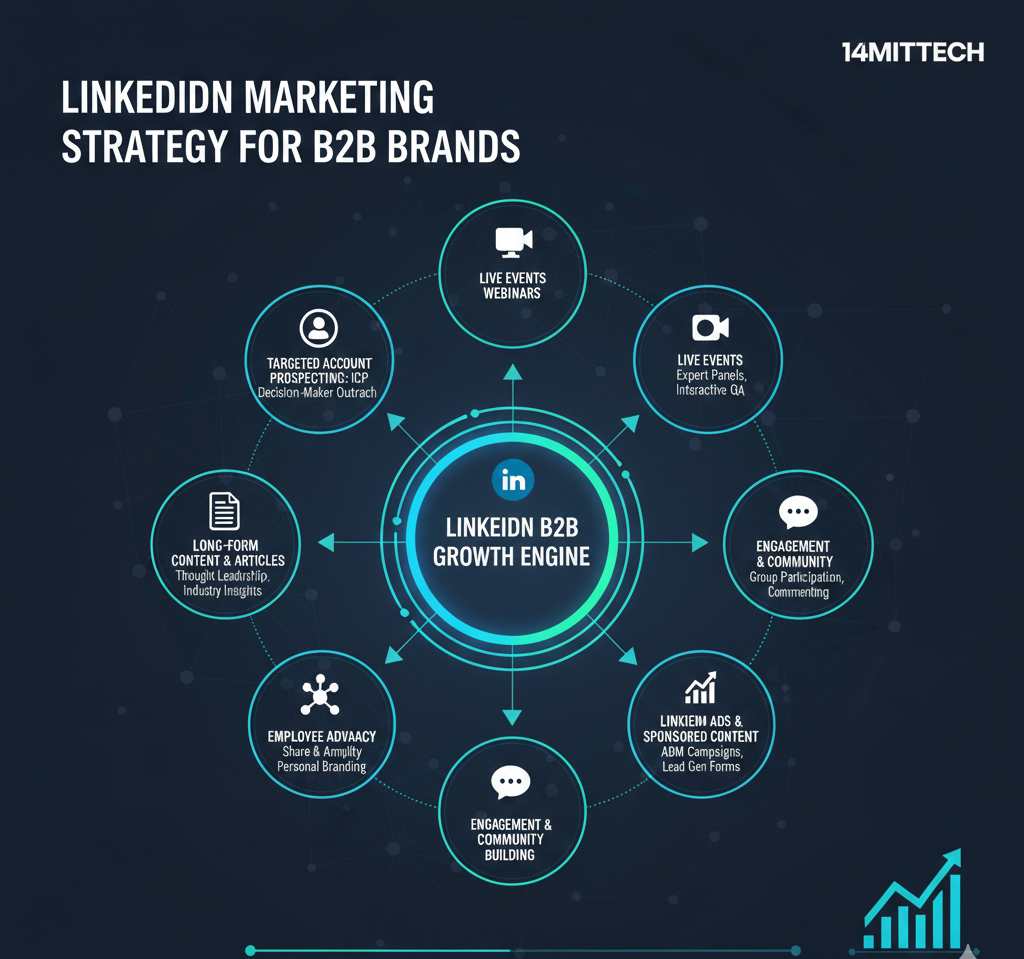
Why LinkedIn Matters for B2B Growth
A strong LinkedIn marketing strategy for B2B brands is no longer optional in 2026. LinkedIn has evolved into the most powerful professional networking and B2B lead generation platform, where decision-makers, founders, and industry leaders actively consume business-focused content. Unlike other social platforms that prioritize entertainment, LinkedIn prioritizes expertise, insights, and professional conversations.
For B2B brands, this creates a unique opportunity to position themselves as industry authorities while generating high-quality leads organically. A well-structured LinkedIn marketing strategy for B2B brands focuses on thought leadership, relationship building, and consistent value delivery rather than aggressive selling. Companies that approach the platform strategically often experience stronger brand credibility and more qualified inbound inquiries.
1. Understanding the LinkedIn Algorithm in 2026
To build an effective LinkedIn marketing strategy for B2B brands, it is essential to understand how the algorithm works. LinkedIn prioritizes content that sparks meaningful professional conversations. Posts that generate comments, shares, and dwell time receive broader distribution.
The first hour after publishing is critical. If your content receives engagement quickly, LinkedIn pushes it to a wider audience within your network and sometimes beyond it. Educational insights, industry analysis, and experience-based storytelling perform particularly well because they encourage discussion.
Native content formats such as text posts, carousels (document posts), and short native videos often outperform external links. The algorithm favors content that keeps users on the platform longer, so crafting insightful posts that encourage thoughtful interaction is key.
2. Building Authority Through Thought Leadership
Thought leadership forms the backbone of a successful LinkedIn marketing strategy for B2B brands. Instead of promoting services directly, brands should focus on sharing expertise, industry trends, case studies, and lessons learned. Decision-makers are more likely to trust brands that demonstrate knowledge rather than those that constantly pitch.
Long-form storytelling posts that share real experiences tend to perform exceptionally well. Breaking down complex industry topics into simple, actionable insights builds credibility. When executives or founders share personal insights from their professional journey, it humanizes the brand and increases engagement.
Professional digital marketing teams, including 14mittech, often prioritize authority-driven content because it builds long-term brand equity. Establishing expertise first makes lead generation more natural and less sales-driven.
3. Content Formats That Drive Engagement
Different content formats serve different purposes on LinkedIn. Text-based posts with strong hooks are highly effective for sparking discussions. Document posts allow brands to share educational slide-style content that increases dwell time. Native video content helps explain complex topics while maintaining audience attention.
Consistency is more important than frequency. Publishing high-value content three to four times per week can outperform daily low-quality posts. Strong opening lines that address a specific pain point increase the likelihood that users will continue reading.
Engagement should not stop after posting. Responding thoughtfully to comments and engaging with other industry leaders strengthens visibility. LinkedIn rewards accounts that actively participate in conversations rather than those that only broadcast content.
4. Lead Generation Without Direct Selling
One of the biggest mistakes B2B brands make is treating LinkedIn as a direct sales platform. Instead, the focus should be on relationship-building. A strategic LinkedIn marketing strategy for B2B brands nurtures trust before pitching services.
Optimizing your company page and personal profiles is crucial. Clear positioning statements, value-driven headlines, and client-focused summaries improve credibility. When your content consistently educates and inspires, inbound inquiries naturally increase.
Direct messages should be personalized and conversation-focused rather than transactional. When trust is built through consistent thought leadership, outreach becomes more effective and welcomed.
5. Using Analytics to Improve Performance
Data plays a crucial role in refining your LinkedIn strategy. LinkedIn analytics provides insights into impressions, engagement rate, profile visits, and follower growth. Monitoring which posts generate the most meaningful conversations helps identify high-performing themes.
Instead of focusing solely on impressions, analyze engagement quality. Posts that spark detailed discussions are more valuable than those that generate passive likes. Reviewing performance monthly allows brands to refine messaging and double down on topics that resonate most with their target audience.
A structured, data-driven approach ensures that your LinkedIn marketing strategy for B2B brands evolves alongside audience behavior and industry trends.
FAQs:
1. What is the most effective LinkedIn marketing strategy for B2B brands?
The most effective strategy focuses on thought leadership, consistent value-driven content, and meaningful engagement. Instead of direct selling, B2B brands should educate their audience, share insights, and build trust through professional conversations on LinkedIn.
2. How often should B2B brands post on LinkedIn?
Posting three to four high-quality posts per week is generally effective. Consistency matters more than volume. Each post should provide actionable insights or spark industry-related discussions to improve engagement and visibility.
3. Is LinkedIn better than other platforms for B2B marketing?
For most B2B industries, LinkedIn performs better because it directly connects brands with decision-makers, executives, and professionals. Unlike entertainment-driven platforms, LinkedIn encourages business-focused discussions and authority-building content.
4. How long does it take to see results from LinkedIn marketing?
Organic growth typically takes three to six months of consistent, strategic posting. Results depend on content quality, engagement levels, and how well the brand communicates its expertise and value proposition.
5. Can small B2B companies succeed on LinkedIn?
Yes. LinkedIn’s algorithm rewards relevance and engagement rather than company size. Even small B2B brands can build strong authority by consistently sharing valuable industry insights and participating in conversations.
Long-Term Success on LinkedIn Requires Strategy
A powerful LinkedIn marketing strategy for B2B brands is built on authority, consistency, and relationship-building. The platform rewards expertise and meaningful engagement rather than aggressive promotion.
By focusing on thought leadership, valuable insights, and data-driven optimization, B2B brands can position themselves as trusted industry leaders. Over time, this approach generates higher-quality leads and stronger professional networks. When strategy aligns with audience needs, LinkedIn becomes a sustainable growth channel rather than just another social media platform.