
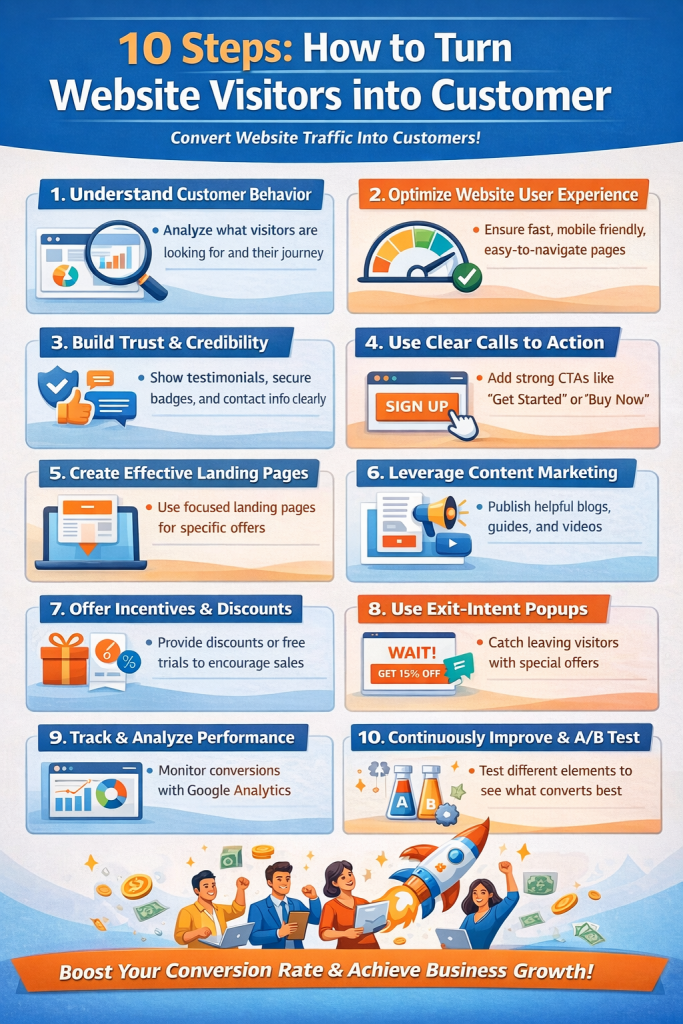
Why Learning How to Turn Website Visitors into Customer Is Important
Many websites receive traffic every day but struggle to convert those visitors into paying customers. Getting people to your website is only the first step. The real success of any online business depends on how to turn website visitors into customer effectively. Without a clear conversion strategy, even a high number of visitors may not generate sales or leads.
Businesses often focus heavily on marketing and traffic generation but forget to optimize the customer journey once people arrive on the website. Visitors need trust, clarity, and motivation before they decide to buy a product or contact a business. This is why understanding how to turn website visitors into customer is one of the most important skills in digital marketing.
In this guide, you will learn beginner-friendly strategies that help transform casual visitors into loyal customers. From improving website design to creating persuasive content and strong calls-to-action, these methods can significantly increase conversions and help your website achieve its real purpose.
1. Understanding Website Visitors and Customer Behavior
Before learning how to turn website visitors into customer, it is important to understand why people visit a website in the first place. Most visitors arrive because they are searching for information, comparing solutions, or exploring a product or service that might help them solve a problem.
Visitors rarely make a purchase immediately after landing on a website. Instead, they go through a process that includes researching, evaluating options, and building trust with a brand. If a website fails to guide users through this journey, they may leave without taking any action.
Understanding visitor behavior helps businesses create better experiences that lead to conversions. By analyzing how people interact with pages, where they spend time, and where they drop off, companies can identify opportunities to improve engagement and encourage users to move further down the sales funnel.
When businesses focus on the user’s journey instead of only promoting products, they create a more effective strategy for how to turn website visitors into customer.
2. Improve Website User Experience for Better Conversions
User experience plays a major role in determining whether visitors stay on a website or leave immediately. A confusing layout, slow loading speed, or cluttered design can discourage potential customers before they even explore the content.
1. Fast Website Loading Speed
Website speed has a direct impact on conversions. Visitors expect pages to load quickly, and even a few seconds of delay can lead to frustration. When pages load slowly, users often leave and look for alternatives.
Improving page speed through optimized images, better hosting, and efficient coding can create a smoother experience for users. A faster website increases engagement and improves the chances of converting visitors into customers.
2. Clear and Simple Navigation
Navigation should help visitors easily find what they are looking for. If users cannot locate products, services, or important information quickly, they may abandon the site.
Simple menus, organized page structures, and logical content flow make it easier for visitors to explore the website. When navigation feels intuitive, users spend more time on the site and are more likely to move toward a purchase decision.
3. Mobile-Friendly Design
A large portion of website traffic comes from mobile devices. If a website is not optimized for smartphones and tablets, many visitors will struggle to interact with the content.
Responsive design ensures that pages adapt to different screen sizes. This improvement creates a smoother experience for users and strengthens the overall strategy for how to turn website visitors into customer.
3. Build Trust and Credibility on Your Website
Trust is one of the biggest factors influencing whether visitors become customers. People are unlikely to purchase from a website that appears unreliable or unfamiliar.
1. Display Customer Testimonials
Testimonials provide social proof that others have successfully used your product or service. When visitors see positive feedback from real customers, they feel more confident about making a decision.
Sharing detailed testimonials with names, photos, or case studies increases authenticity and builds stronger credibility.
2. Show Clear Contact Information
Websites that clearly display contact information appear more trustworthy. Providing an email address, phone number, or contact form reassures visitors that the business is legitimate and accessible.
Transparency encourages users to reach out for more information, which can eventually lead to a sale.
3. Use Professional Design and Branding
Professional design elements such as consistent colors, quality images, and readable typography create a strong first impression. A well-designed website signals professionalism and reliability, which helps support the goal of how to turn website visitors into customer.
4. Use Strong Calls to Action That Convert
Calls to action guide visitors toward the next step in their journey. Without clear direction, many users may simply browse the site and leave without taking any meaningful action.
1. Create Clear Action-Oriented Messages
A call to action should clearly explain what the user should do next. Simple phrases such as “Get Started,” “Book a Demo,” or “Download the Guide” help visitors understand the value of taking action.
These messages should focus on benefits rather than commands. When users understand what they gain, they are more likely to click.
2. Place CTAs in Strategic Locations
Calls to action should appear in visible locations throughout the website. Placing them at the end of blog posts, within landing pages, and near product descriptions ensures that visitors always know what step to take next.
Strategic placement helps guide users through the conversion journey smoothly.
3. Use Visual Contrast
Buttons and call-to-action elements should stand out visually from the rest of the page. Contrasting colors, clear shapes, and readable text make CTAs easier to notice.
When users quickly identify these elements, it improves the chances of successfully implementing how to turn website visitors into customer.
5. Optimize Landing Pages to Increase Conversions
Landing pages are specifically designed to convert visitors into leads or customers. Unlike general website pages, landing pages focus on one clear objective.
1. Focus on One Goal
Effective landing pages avoid distractions and concentrate on a single action. Whether the goal is collecting email addresses or selling a product, every element on the page should support that objective.
Clear messaging helps visitors understand what they will receive and why it matters.
2. Highlight Benefits Instead of Features
Visitors care more about how a product helps them than about technical details. Instead of listing features alone, explain how those features solve real problems or improve the user’s experience.
This approach makes your offer more compelling and persuasive.
3. Use Visual Elements to Support the Message
Images, videos, and illustrations can make landing pages more engaging. Visual elements help explain complex ideas quickly and create emotional connections with visitors.
When used effectively, visuals strengthen the process of how to turn website visitors into customer.
6. Use Content Marketing to Guide Visitors Toward Purchase
Content marketing plays an important role in educating visitors and helping them move closer to a buying decision. Informative content builds authority and answers questions that potential customers may have.
1. Publish Helpful Blog Content
Blog posts that address common problems attract visitors through search engines and provide valuable information. When readers find helpful insights on your website, they are more likely to trust your brand.
Over time, this trust can lead to conversions.
2. Provide Educational Resources
Offering guides, tutorials, or downloadable resources adds value to the user experience. These materials demonstrate expertise and position your brand as a helpful source of knowledge.
Visitors who benefit from your content are more likely to become customers in the future.
3. Use Internal Links to Guide Visitors
Internal links help visitors discover additional relevant content on your website. For example, linking to articles such as “Advanced SEO Strategies That Actually Drive Traffic” or “How to Win Traffic Without Website Clicks” encourages users to continue exploring your site.
This extended engagement increases the likelihood of conversion.
For additional insights into conversion optimization, you can explore resources from HubSpot and Google Analytics Academy, which provide valuable guidance on understanding user behavior and improving marketing strategies.
7. Track and Improve Conversion Performance
Improving conversions requires ongoing analysis and optimization. Tracking data allows businesses to understand what is working and what needs improvement.
1. Monitor Visitor Behavior
Analytics tools provide insights into how users interact with your website. They reveal which pages attract the most traffic, where visitors spend time, and where they leave the site.
These insights help identify opportunities to improve the customer journey.
2. Test Different Page Elements
A/B testing allows businesses to compare variations of headlines, images, or calls to action. By testing different versions, marketers can determine which elements produce better results.
Continuous testing helps refine strategies for how to turn website visitors into customer.
3. Improve Based on Data
The most successful websites regularly analyze performance data and adjust their strategies. Small improvements such as clearer messaging, better layout, or stronger calls to action can significantly increase conversion rates over time.
FAQs:
1. What does it mean to turn website visitors into customers?
It means converting people who visit your website into individuals who take meaningful actions such as purchasing a product, subscribing to a service, or contacting your business.
2. Why do many websites fail to convert visitors?
Many websites fail because they lack clear messaging, trust signals, user-friendly design, or strong calls to action that guide visitors toward a purchase.
3. How important is website design for conversions?
Website design is extremely important because it affects user experience, trust, and navigation. A well-designed website encourages visitors to stay longer and take action.
4. Can content marketing help convert visitors?
Yes, informative content builds trust and educates visitors about products or services, which increases the likelihood that they will become customers.
5. What tools help track website conversions?
Tools like analytics platforms and conversion tracking software help businesses monitor visitor behavior and identify ways to improve conversion rates.
Final Thoughts on How to Turn Website Visitors into Customer
Learning how to turn website visitors into customer is essential for any online business that wants to grow successfully. While attracting traffic is important, the real value comes from converting those visitors into loyal customers who trust your brand and engage with your products or services.
By improving user experience, building credibility, using persuasive calls to action, optimizing landing pages, and providing valuable content, businesses can create a powerful conversion strategy. These methods work together to guide visitors through the decision-making process and encourage them to take meaningful action.
When companies consistently analyze performance and refine their strategies, they gradually improve their ability to convert traffic into revenue. Implementing these techniques will help any business master how to turn website visitors into customer and build a stronger, more profitable online presence.