
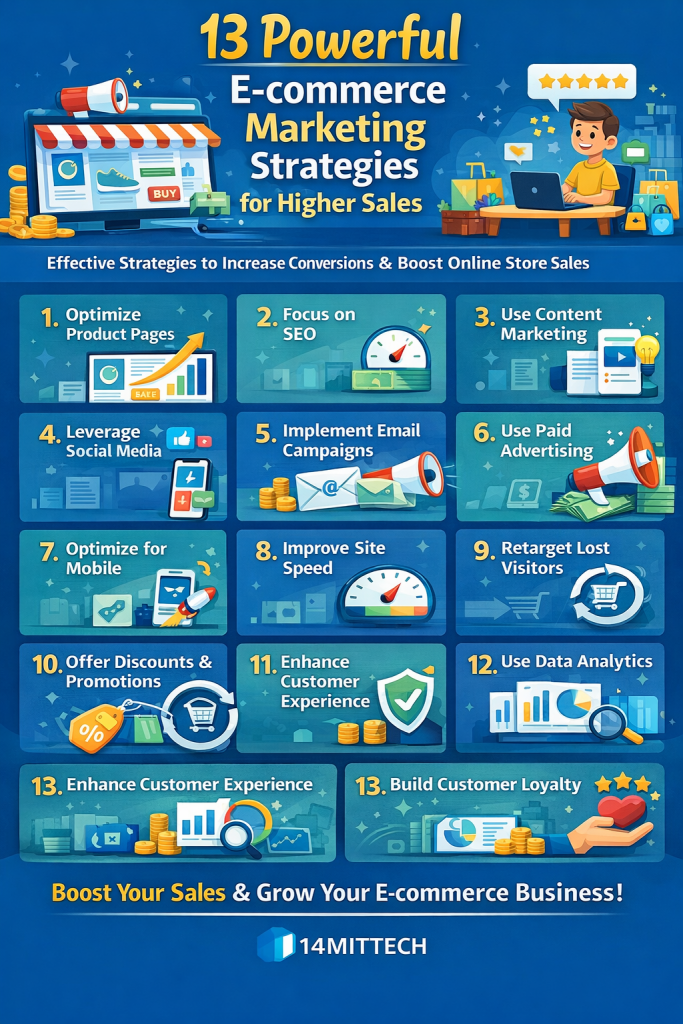
Why E-commerce Marketing Strategies for Higher Sales Matter
In today’s highly competitive digital landscape, having an online store is no longer enough to guarantee success. Businesses must implement effective e-commerce mahttps://14mittech.com/ecommerce-marketing-mistakes-that-reduce-sales/rketing strategies for higher sales to attract customers, engage them, and convert them into repeat buyers. With thousands of online stores competing for attention, standing out requires a strategic approach that combines visibility, user experience, and consistent engagement.
E-commerce marketing is not just about promoting products; it is about creating a seamless customer journey from discovery to purchase. Consumers interact with brands through multiple touchpoints, including search engines, social media, email campaigns, and online advertisements. Platforms like Google play a major role in helping customers discover products, while social media platforms influence purchasing decisions through content and recommendations.
Understanding e-commerce marketing strategies for higher sales helps businesses optimize every stage of the customer journey. From attracting traffic to improving conversion rates, each strategy contributes to increasing revenue and building long-term customer relationships. Businesses that invest in structured marketing strategies are better positioned to scale their operations and maintain consistent growth.
Digital marketing agencies such as 14mittech often focus on combining multiple strategies to create a comprehensive approach. Instead of relying on a single channel, successful e-commerce businesses integrate SEO, content marketing, social media, and paid advertising to maximize their reach and performance.
By applying effective e-commerce marketing strategies for higher sales, businesses can improve their online visibility, enhance customer experience, and ultimately increase their revenue in a sustainable way.
1. Optimize Product Pages for Conversions
Product pages are the foundation of any e-commerce website. When visitors land on a product page, they should immediately understand what the product is, how it benefits them, and why they should make a purchase. High-quality images, detailed descriptions, and clear pricing information help build trust and encourage conversions.
Optimized product pages also include persuasive elements such as customer reviews, ratings, and guarantees. These factors reduce hesitation and make customers feel more confident about their purchase decisions. A well-optimized product page not only attracts visitors but also converts them into buyers.
2. Focus on Search Engine Optimization (SEO)
Search engine optimization is essential for driving organic traffic to e-commerce websites. By targeting relevant keywords, businesses can attract customers who are actively searching for products or solutions. SEO helps improve visibility in search results and brings highly targeted traffic to the website.
Optimizing product descriptions, category pages, and blog content ensures that search engines can understand the website’s content. Over time, consistent SEO efforts lead to higher rankings and increased organic traffic, which directly contributes to higher sales.
3. Use Content Marketing to Build Authority
Content marketing allows e-commerce businesses to educate their audience while promoting their products. Blog posts, guides, and tutorials help customers make informed decisions and position the brand as an authority in its niche.
For example, a store selling fitness equipment can publish articles about workout routines or health tips. This type of content attracts visitors who may not be ready to buy immediately but can become potential customers over time.
4. Leverage Social Media Marketing
Social media platforms such as Instagram and Facebook provide powerful opportunities for e-commerce businesses to connect with their audience. By sharing engaging content, product updates, and customer stories, brands can build relationships and increase visibility.
Social media also allows businesses to showcase products in creative ways, making it easier for customers to discover and interact with them.
5. Implement Email Marketing Campaigns
Email marketing is one of the most effective ways to nurture leads and encourage repeat purchases. By collecting customer email addresses, businesses can send personalized messages, promotions, and product recommendations.
Regular communication helps keep the brand top of mind and increases the chances of converting subscribers into customers.
6. Use Paid Advertising for Immediate Results
Paid advertising provides instant visibility for e-commerce businesses. Platforms such as search ads and social media ads allow brands to target specific audiences based on their interests and behavior.
Well-optimized advertising campaigns can drive traffic, generate leads, and increase sales quickly. Testing different ad creatives and targeting options helps businesses identify what works best for their audience.
7. Optimize for Mobile Shopping Experience
Mobile optimization is critical because a large percentage of online shoppers use mobile devices. A website that is not mobile-friendly may lose potential customers due to poor usability.
Responsive design ensures that product pages, checkout processes, and navigation work smoothly on all devices. A seamless mobile experience encourages users to complete their purchases.
8. Improve Website Speed and Performance
Website speed directly impacts user experience and conversion rates. Slow-loading pages can frustrate visitors and cause them to leave before completing a purchase.
Optimizing images, reducing unnecessary scripts, and using reliable hosting solutions can significantly improve performance. Faster websites provide better user experiences and increase the likelihood of conversions.
9. Use Retargeting to Recover Lost Customers
Not all visitors make a purchase during their first visit. Retargeting allows businesses to reconnect with users who previously visited their website but did not convert.
By showing relevant ads to these users, businesses can remind them about products they viewed and encourage them to return and complete their purchase.
10. Offer Discounts and Promotions Strategically
Discounts and promotions can be powerful tools for increasing sales when used strategically. Limited-time offers, seasonal discounts, and exclusive deals create a sense of urgency that encourages customers to act quickly.
However, promotions should be used carefully to avoid reducing perceived product value.
11. Enhance Customer Experience and Trust
Customer experience plays a major role in driving sales. Easy navigation, secure payment options, and clear return policies help build trust and encourage purchases.
Providing excellent customer support also improves satisfaction and increases the likelihood of repeat business.
12. Use Data Analytics to Improve Performance
Data-driven decisions are essential for optimizing e-commerce marketing strategies. Analytics tools help businesses understand customer behavior, track conversions, and identify areas for improvement.
By analyzing this data, businesses can refine their strategies and achieve better results over time.
13. Build Long-Term Customer Relationships
Repeat customers are often more valuable than new customers because they already trust the brand. Building long-term relationships through personalized communication, loyalty programs, and consistent engagement helps increase customer lifetime value.
Businesses that focus on retention alongside acquisition can achieve sustainable growth.
FAQs:
1. What are e-commerce marketing strategies for higher sales?
They are techniques used to attract customers, improve conversions, and increase revenue for online stores.
2. Which strategy works best for e-commerce growth?
A combination of SEO, content marketing, social media, and paid advertising typically produces the best results.
3. How can I increase sales quickly in e-commerce?
Using paid ads, optimizing product pages, and offering limited-time promotions can help boost sales quickly.
4. Why is SEO important for e-commerce?
SEO helps attract organic traffic from search engines like Google, leading to more potential customers.
Driving Growth With E-commerce Marketing Strategies for Higher Sales
Implementing effective e-commerce marketing strategies for higher sales is essential for businesses that want to succeed in the competitive online marketplace. By focusing on visibility, user experience, and customer engagement, brands can create a strong foundation for growth.
From optimizing product pages to leveraging social media and data analytics, each strategy contributes to increasing conversions and building lasting customer relationships. Businesses that consistently refine their approach and adapt to changing trends are more likely to achieve long-term success.