
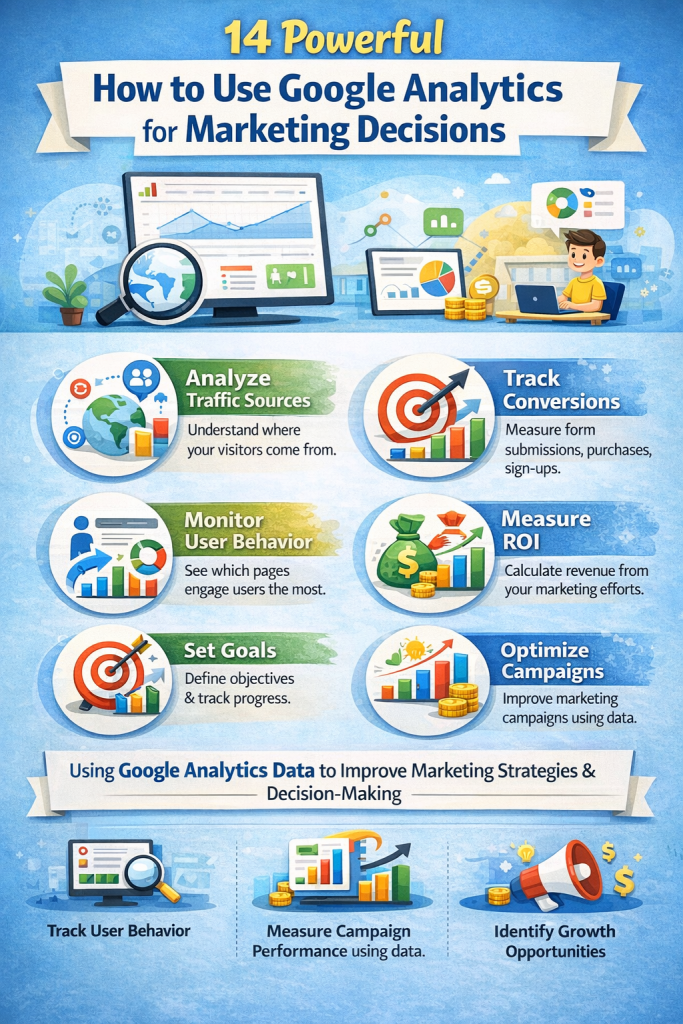
Why Learning How to Use Google Analytics for Marketing Decisions Is Important
Understanding how to use Google Analytics for marketing decisions is one of the most valuable skills for businesses that want to grow in the digital space. In today’s data-driven environment, marketing success is no longer based on assumptions or guesswork. Instead, it relies on accurate data, user behavior insights, and measurable performance indicators. Businesses that leverage analytics effectively can make smarter decisions, optimize their campaigns, and achieve better results over time.
Google Analytics provides detailed insights into how users interact with a website. It tracks metrics such as traffic sources, user behavior, session duration, bounce rate, and conversions. These insights allow marketers to understand what is working, what needs improvement, and where opportunities exist for growth.
When learning how to use Google Analytics for marketing decisions, businesses must focus on interpreting data rather than just collecting it. Data alone does not drive results; it is the ability to analyze and act on that data that makes the difference. By identifying trends and patterns, businesses can refine their strategies and improve performance across different marketing channels.
Digital marketing agencies like 14mittech often use analytics tools to guide their strategies and deliver measurable results. By combining data insights with marketing expertise, businesses can create campaigns that are more targeted, efficient, and effective.
Mastering how to use Google Analytics for marketing decisions enables businesses to optimize their marketing efforts, improve customer experiences, and ultimately achieve long-term growth.
1. Understanding the Basics of Google Analytics
To effectively learn how to use Google Analytics for marketing decisions, it is important to understand the basics of how the platform works. Google Analytics collects data from website visitors and organizes it into reports that provide insights into user behavior.
The platform tracks metrics such as the number of visitors, page views, session duration, and bounce rate. These metrics help businesses understand how users interact with their website and identify areas for improvement.
By regularly reviewing these reports, marketers can gain a clearer picture of website performance and user engagement.
2. Analyzing Traffic Sources
One of the key aspects of how to use Google Analytics for marketing decisions is analyzing traffic sources. This data shows where website visitors are coming from, including search engines, social media platforms, direct visits, and referral websites.
Understanding traffic sources helps businesses identify which channels are driving the most visitors and which ones need improvement. For example, if organic search traffic is high, it indicates strong SEO performance. If social media traffic is low, it may suggest the need for better content or engagement strategies.
3. Understanding User Behavior
User behavior analysis is essential when learning how to use Google Analytics for marketing decisions. This includes tracking how users navigate the website, which pages they visit, and how long they stay on each page.
Behavior reports provide insights into user engagement and highlight areas where users may be losing interest. By identifying these patterns, businesses can optimize content and improve user experience.
4. Tracking Conversion Goals
Conversions are one of the most important metrics in digital marketing. Understanding how to use Google Analytics for marketing decisions involves setting up and tracking conversion goals.
Conversions can include actions such as form submissions, purchases, or newsletter signups. By tracking these actions, businesses can measure the effectiveness of their marketing campaigns and identify which strategies are generating results.
5. Using Audience Insights for Better Targeting
Audience insights provide valuable information about website visitors, including demographics, interests, and location. These insights help businesses understand their target audience and create more relevant marketing campaigns.
When businesses know who their audience is, they can tailor their content and messaging to meet their needs. This leads to higher engagement and better conversion rates.
6. Monitoring Bounce Rate and Engagement
Bounce rate is a key metric that indicates how many visitors leave a website without interacting further. Monitoring this metric is essential for improving user experience.
A high bounce rate may indicate issues with content relevance, page speed, or design. By addressing these issues, businesses can improve engagement and encourage users to explore more pages.
7. Analyzing Top-Performing Content
Content performance analysis helps businesses identify which pages are attracting the most traffic and engagement. This is an important part of how to use Google Analytics for marketing decisions.
By understanding which content performs well, businesses can create similar content to attract more visitors and increase engagement.
8. Using Data to Improve SEO Strategy
Google Analytics provides valuable insights for improving SEO performance. By analyzing keyword data, traffic trends, and user behavior, businesses can refine their SEO strategies.
Understanding which keywords drive traffic and conversions helps businesses focus on the most effective search terms.
9. Optimizing Marketing Campaigns
Marketing campaigns can be optimized using data from Google Analytics. By tracking performance metrics, businesses can identify which campaigns are successful and which need improvement.
This data-driven approach ensures that marketing efforts are focused on strategies that deliver results.
10. Tracking Customer Journey
Understanding the customer journey is essential for improving marketing strategies. Google Analytics allows businesses to track how users move through the website from entry to conversion.
This insight helps businesses identify potential barriers and optimize the user experience.
11. Using Real-Time Data for Immediate Insights
Real-time data provides instant insights into user activity on the website. This is particularly useful for monitoring campaigns and identifying trends as they happen.
Real-time insights allow businesses to make quick adjustments and improve performance.
12. Measuring ROI of Marketing Efforts
One of the most important aspects of how to use Google Analytics for marketing decisions is measuring return on investment. By analyzing conversions and revenue data, businesses can determine the effectiveness of their marketing strategies.
This helps in allocating budgets more efficiently and focusing on high-performing channels.
13. Integrating Google Analytics With Other Tools
Integrating Google Analytics with other tools such as advertising platforms enhances data accuracy and provides deeper insights. This integration allows businesses to track performance across multiple channels.
14. Continuous Optimization Based on Data
Continuous improvement is key to marketing success. By regularly analyzing data and making adjustments, businesses can optimize their strategies and achieve better results over time.
FAQs:
1. What is Google Analytics used for?
Google Analytics is used to track and analyze website traffic and user behavior.
2. How does Google Analytics help in marketing decisions?
It provides data insights that help businesses optimize campaigns and improve performance.
3. Is Google Analytics free to use?
Yes, Google Analytics offers a free version with powerful features.
4. Can beginners use Google Analytics?
Yes, beginners can learn and use it with basic understanding and practice.
Making Smarter Decisions With Google Analytics
Understanding how to use Google Analytics for marketing decisions empowers businesses to make informed choices based on real data. Instead of relying on assumptions, marketers can use insights to optimize campaigns, improve user experience, and increase conversions.
By consistently analyzing data and adapting strategies, businesses can achieve sustainable growth and stay competitive in the digital marketplace.