
Understanding the Difference Between SEO and Paid Ads
Understanding the difference between SEO and paid ads is essential for businesses that want to build a strong digital marketing strategy. Both search engine optimization and paid advertising are powerful methods used to drive traffic to websites, generate leads, and increase sales. However, they operate in very different ways, offer unique advantages, and require different approaches to achieve results.
Search engines such as Google provide two main ways for businesses to appear in search results. One is through organic listings, which are achieved using SEO techniques, and the other is through paid placements, which are created using advertising platforms. Knowing the difference between SEO and paid ads helps businesses decide how to allocate their marketing budget and resources effectively.
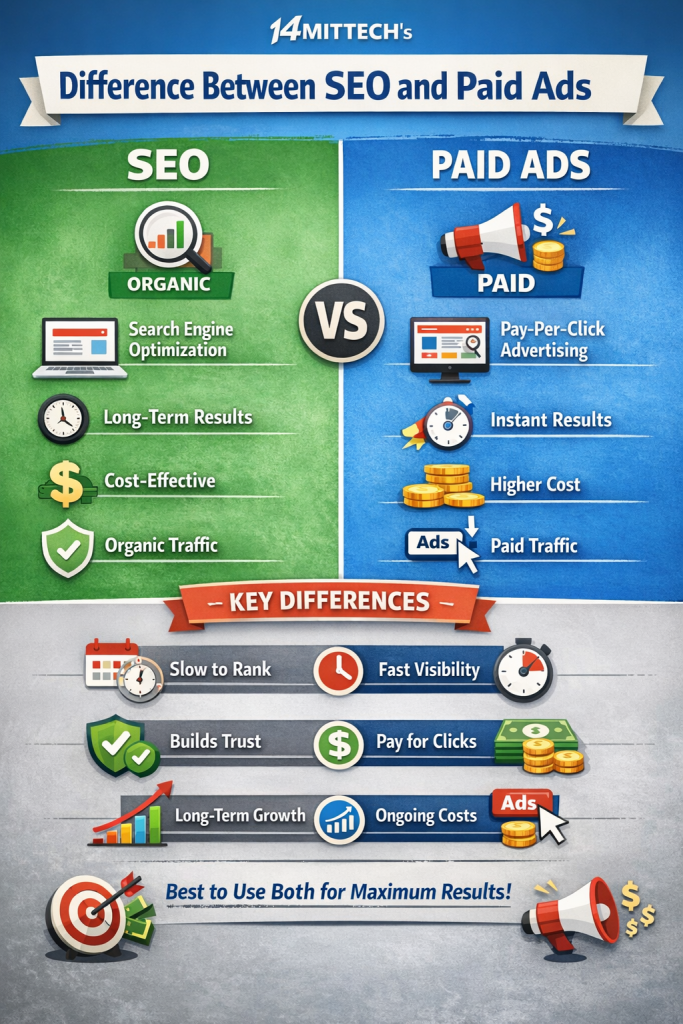
SEO focuses on optimizing website content, structure, and authority to rank higher in organic search results. It is a long-term strategy that builds sustainable visibility over time. On the other hand, paid ads provide immediate visibility by placing ads at the top of search results or across digital platforms. Businesses pay for each click or impression, making it a faster but ongoing investment.
Digital marketing experts, including teams at 14mittech, often recommend combining both approaches to achieve balanced growth. By understanding the difference between SEO and paid ads, businesses can create a strategy that delivers both short-term results and long-term success.
1. What Is SEO and How It Works
To fully understand the difference between SEO and paid ads, it is important to first understand SEO itself. Search engine optimization involves improving a website’s content, structure, and authority so that it ranks higher in organic search results.
SEO includes techniques such as keyword optimization, content creation, technical improvements, and backlink building. These efforts help search engines understand the relevance and quality of a website, making it more likely to appear for relevant searches.
SEO is a long-term strategy. It takes time to see results, but once rankings improve, websites can generate consistent traffic without paying for each click.
2. What Are Paid Ads and How They Work
Paid advertising, often referred to as pay-per-click advertising, allows businesses to display ads in search results or on digital platforms. One of the most widely used platforms is Google Ads, which enables businesses to target users based on keywords, location, and behavior.
Unlike SEO, paid ads deliver immediate results. As soon as a campaign is launched, ads can start appearing to potential customers. This makes paid advertising ideal for businesses that want quick visibility and fast traffic.
However, paid ads require continuous investment. Once the budget is stopped, the traffic also stops.
3. Time Required to See Results
One of the biggest aspects of the difference between SEO and paid ads is the time required to achieve results. SEO is a gradual process that may take weeks or months before noticeable improvements occur. This is because search engines need time to crawl, index, and evaluate website changes.
Paid ads, on the other hand, provide instant visibility. Businesses can start receiving traffic as soon as their campaigns go live. This makes paid advertising a powerful tool for short-term goals or promotions.
4. Cost Structure and Investment
SEO and paid ads have very different cost structures. SEO requires an investment in content creation, technical optimization, and ongoing improvements. While it may involve upfront costs, it does not require payment for each visitor.
Paid ads operate on a pay-per-click or pay-per-impression model. Businesses must pay every time a user clicks on their ad or views it. This means costs can increase quickly depending on competition and keyword demand.
Understanding this financial aspect is crucial when analyzing the difference between SEO and paid ads.
5. Long-Term vs Short-Term Benefits
SEO provides long-term benefits by building sustainable traffic over time. Once a website achieves strong rankings, it can continue to attract visitors without additional advertising costs.
Paid ads offer short-term benefits by delivering immediate traffic and visibility. However, the results stop as soon as the campaign ends.
Businesses must balance these approaches to achieve both immediate and long-term growth.
6. Trust and Credibility
Organic search results are often perceived as more trustworthy by users. People tend to trust websites that rank naturally because they believe these results are more relevant and authoritative.
Paid ads, while highly visible, may sometimes be viewed as promotional content. However, well-crafted ads can still build trust if they provide value and relevance.
7. Click-Through Rates and User Behavior
User behavior also highlights the difference between SEO and paid ads. Organic results often receive higher click-through rates for informational queries, while paid ads perform well for transactional searches.
This difference occurs because users have different intentions when searching. Understanding these behaviors helps businesses optimize their strategies.
8. Targeting Capabilities
Paid ads offer advanced targeting options that allow businesses to reach specific audiences based on demographics, interests, and location. This level of targeting is not possible with SEO alone.
SEO relies on keyword targeting and content relevance to attract users. While effective, it does not provide the same level of control as paid advertising.
9. Flexibility and Control
Paid ads provide more control and flexibility. Businesses can quickly adjust campaigns, change budgets, and test different strategies.
SEO changes take time to reflect in search results, making it less flexible in the short term.
10. Competition and Difficulty
SEO can be highly competitive, especially for popular keywords. Achieving top rankings requires consistent effort and high-quality content.
Paid ads allow businesses to compete for visibility regardless of their organic rankings. However, competition can increase costs.
11. Measurability and Analytics
Both SEO and paid ads provide measurable results. Tools and analytics help businesses track performance, understand user behavior, and optimize strategies.
Paid ads often provide more immediate data, while SEO requires longer periods for accurate analysis.
12. Conversion Potential
Paid ads often have higher conversion rates for certain types of searches because they target users with strong intent. SEO also generates conversions but may require nurturing through content and engagement.
13. Sustainability of Traffic
SEO traffic is more sustainable over time, while paid traffic depends on ongoing investment. This is a key factor in the difference between SEO and paid ads.
14. Combining SEO and Paid Ads
The most effective strategy often involves combining both approaches. SEO builds long-term authority, while paid ads provide immediate visibility.
Agencies like 14mittech frequently use this combined approach to maximize results and create balanced marketing strategies.
15. Choosing the Right Strategy for Your Business
Choosing between SEO and paid ads depends on business goals, budget, and timeline. Businesses looking for quick results may focus on paid ads, while those aiming for long-term growth should invest in SEO.
Understanding the difference between SEO and paid ads helps businesses make informed decisions and achieve better marketing outcomes.
FAQs:
1. What is the difference between SEO and paid ads?
SEO focuses on organic rankings, while paid ads provide immediate visibility through paid placements.
2. Which is better SEO or paid ads?
Both have advantages. SEO is better for long-term growth, while paid ads are effective for quick results.
3. Can I use SEO and paid ads together?
Yes. Combining both strategies can maximize traffic and improve overall performance.
4. How long does SEO take compared to paid ads?
SEO takes time to show results, while paid ads can generate traffic immediately.
Finding the Right Balance Between SEO and Paid Ads
The difference between SEO and paid ads lies in their approach, cost, timing, and long-term impact. SEO builds sustainable growth over time, while paid ads deliver immediate results and targeted visibility.
By combining both strategies, businesses can create a comprehensive marketing plan that drives traffic, generates leads, and supports long-term success.