
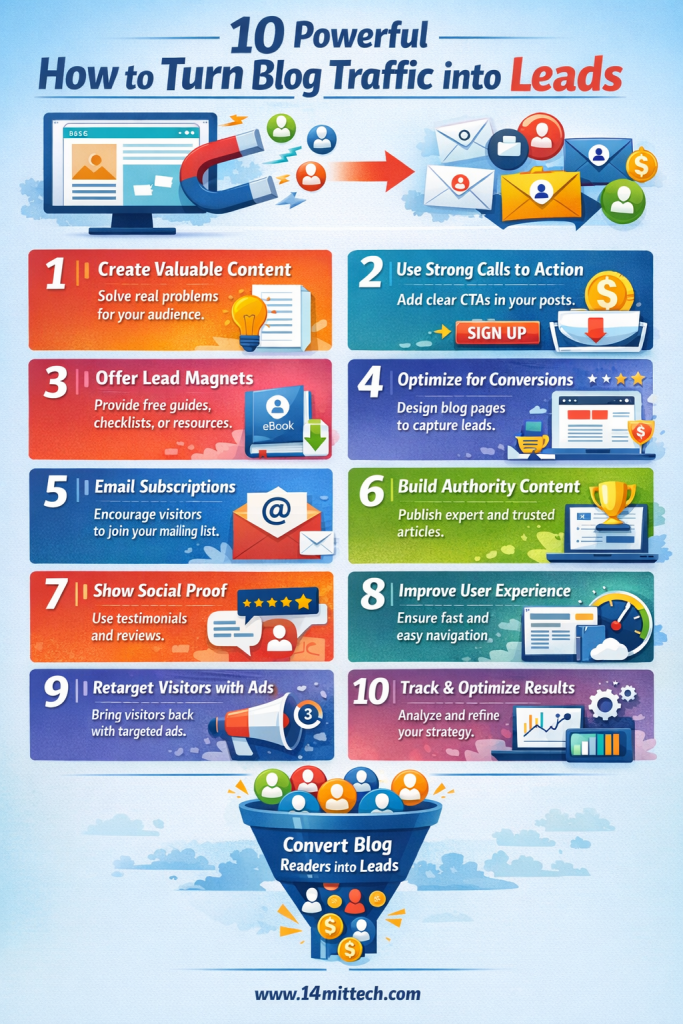
Why Turning Blog Traffic into Leads Matters
Many websites successfully attract visitors through search engines, social media, and content marketing. However, generating traffic alone does not guarantee business growth. The real success of a blog lies in its ability to convert readers into potential customers. This is where a strong strategy on how to turn blog traffic into leads becomes extremely important for businesses and marketers who want measurable results from their content efforts.
Blogs play a crucial role in digital marketing because they help brands educate audiences, build authority, and attract organic visitors through search engines like Google. Yet many businesses struggle to convert those visitors into actual leads. People may read an article, find the information useful, and leave the website without taking any further action. Without proper lead generation strategies, valuable traffic can be lost.
To successfully understand how to turn blog traffic into leads, businesses must design their content with clear goals in mind. Every article should guide readers toward the next step, whether that means subscribing to a newsletter, downloading a resource, signing up for a webinar, or contacting the company for services. These small actions gradually move visitors through the marketing funnel and turn casual readers into potential customers.
Professional digital marketing agencies like 14mittech often emphasize the importance of combining high-quality content with conversion-focused strategies. By optimizing blog posts with strategic calls to action, valuable lead magnets, and strong user experience, businesses can significantly increase the number of leads generated from their website traffic.
Understanding how to turn blog traffic into leads allows companies to maximize the value of their content marketing efforts, ensuring that every visitor has the opportunity to become a potential customer.
1. Create Content That Solves Real Problems
The first step in learning how to turn blog traffic into leads is creating content that genuinely helps your audience. Readers are more likely to trust a brand that provides valuable insights, practical advice, or solutions to common problems. When people feel that a blog consistently delivers helpful information, they become more willing to engage further with the brand.
High-quality content should address specific questions or challenges that your target audience faces. For example, articles that explain strategies, offer tutorials, or provide detailed guides often perform well because they provide immediate value. When visitors find useful solutions on your website, they begin to see your brand as an authority within the industry.
Content that solves problems also increases the likelihood that readers will spend more time on the page. Longer engagement signals to search engines that the content is relevant and valuable. Over time, this improves search rankings and brings even more visitors who may eventually become leads.
2. Use Strong and Clear Calls to Action
One of the most important steps in understanding how to turn blog traffic into leads is adding effective calls to action within your blog content. A call to action guides readers toward the next step they should take after consuming your content.
Without a clear call to action, many readers simply finish reading and leave the page. A well-written CTA encourages them to take action by offering something valuable in return. This could include signing up for updates, requesting a consultation, or downloading a useful guide related to the topic.
Calls to action should feel natural within the content rather than overly promotional. When placed strategically within the article, they guide readers toward deeper engagement with the brand.
3. Offer Valuable Lead Magnets
Lead magnets are one of the most effective tools for converting blog visitors into leads. A lead magnet is a valuable resource offered in exchange for a visitor’s contact information, typically an email address.
Examples include downloadable guides, industry reports, templates, checklists, or exclusive content. When readers see that they can receive additional value beyond the article they are reading, they are more likely to share their contact details.
A strong lead magnet directly relates to the topic of the blog post. For example, if the article explains a marketing strategy, the lead magnet might offer a detailed implementation guide or checklist that helps readers apply the strategy in practice.
4. Optimize Blog Pages for Conversion
Learning how to turn blog traffic into leads also involves optimizing the design and layout of blog pages. Even high-quality content may fail to convert visitors if the page structure does not support lead generation.
Conversion-focused blog pages often include well-positioned signup forms, visually appealing buttons, and clear navigation. These elements make it easy for readers to take action without interrupting their reading experience.
The placement of forms and calls to action should feel natural within the content flow. When visitors encounter opportunities to subscribe or download resources at relevant points in the article, they are more likely to respond positively.
5. Use Email Subscription Opportunities
Email marketing remains one of the most effective ways to nurture potential customers. By encouraging blog visitors to subscribe to newsletters or updates, businesses can maintain communication with readers even after they leave the website.
Email subscriptions allow brands to share additional content, promotions, and insights with interested audiences. Over time, these consistent interactions build stronger relationships and increase the chances of converting subscribers into customers.
Adding subscription options within blog posts ensures that interested readers can easily stay connected with the brand.
6. Build Trust Through Authority Content
Trust plays a major role in converting blog readers into leads. Visitors are more likely to share their contact information with brands that demonstrate expertise and credibility.
Authority content includes detailed guides, industry insights, case studies, and expert analysis. These types of articles help position the brand as a reliable source of information within the industry.
Companies that consistently publish authoritative content gradually build stronger reputations, making it easier to convert readers into leads over time.
7. Use Social Proof to Increase Credibility
Social proof can significantly influence whether visitors decide to engage further with a brand. Testimonials, case studies, client results, and reviews show readers that others have already benefited from the company’s services or products.
Including social proof within blog pages reinforces credibility and reduces hesitation among potential leads. When visitors see evidence of positive outcomes, they feel more confident about interacting with the brand.
This trust factor can make a significant difference in the conversion process.
8. Improve User Experience and Page Speed
User experience is another important factor when learning how to turn blog traffic into leads. Visitors are more likely to engage with websites that are easy to navigate, visually appealing, and fast to load.
Slow pages or confusing layouts can cause readers to leave before completing any action. Ensuring that blog pages load quickly and function smoothly on mobile devices helps maintain engagement and encourages visitors to explore further.
A positive user experience keeps readers on the website longer, increasing the likelihood that they will eventually become leads.
9. Retarget Blog Visitors With Ads
Retargeting is a powerful marketing technique that allows businesses to reconnect with visitors who previously interacted with their website. Many people do not convert during their first visit, but retargeting ads remind them about the brand and encourage them to return.
These ads can appear on search engines or social media platforms, guiding users back to relevant pages where they can take action.
Retargeting ensures that valuable blog traffic is not wasted and gives visitors another opportunity to become leads.
10. Track and Optimize Lead Generation Performance
The final step in mastering how to turn blog traffic into leads is tracking performance and continuously improving your strategy. Analytics tools help businesses understand how visitors interact with blog content, which calls to action perform best, and where conversions occur.
By analyzing this data, marketers can refine their approach and optimize blog pages for better results. Small adjustments such as improving CTA wording or repositioning signup forms can significantly increase lead generation.
Continuous optimization ensures that blog traffic consistently contributes to business growth.
FAQs:
1. What does it mean to turn blog traffic into leads?
Turning blog traffic into leads means converting website visitors into potential customers by encouraging them to take actions such as subscribing, downloading resources, or contacting the business.
2. Why is lead generation important for blogs?
Lead generation helps businesses capture contact information from visitors so they can nurture relationships and eventually convert them into paying customers.
3. What is the best way to generate leads from blog content?
Providing valuable content, using strong calls to action, offering lead magnets, and optimizing blog pages for conversions are effective ways to generate leads.
4. Can SEO help increase blog leads?
Yes. SEO helps attract targeted visitors who are already searching for relevant information, making them more likely to convert into leads.
Turning Blog Visitors Into Valuable Leads
Understanding how to turn blog traffic into leads is essential for businesses that want to maximize the value of their content marketing efforts. While attracting visitors through SEO and social media is important, the real success lies in converting those visitors into potential customers.
By creating helpful content, offering valuable lead magnets, optimizing blog pages for conversions, and building trust with audiences, businesses can transform casual readers into engaged prospects.
When these strategies are implemented effectively, blog traffic becomes a powerful engine for lead generation and long-term business growth.