
Why Businesses Need a Marketing Strategy for Zero Brand Awareness
A well-planned marketing strategy for zero brand awareness is essential for startups, new businesses, or brands entering competitive markets. When a brand is completely unknown, potential customers have no trust, recognition, or familiarity with the products or services being offered. This lack of visibility makes it difficult for businesses to attract attention, generate leads, or convert visitors into customers. Therefore, developing a structured strategy to build awareness from the ground up becomes a crucial step for long-term business growth.
In today’s digital-first environment, brands must compete not only with established companies but also with thousands of other businesses trying to capture the same audience. Search engines such as Google and social media platforms have become powerful channels where new brands can build recognition if they use the right marketing approach. A strong strategy focuses on creating valuable content, building visibility through search engines, engaging audiences through social platforms, and gradually building trust with potential customers.
Businesses that start with zero brand awareness often face the challenge of gaining credibility. People tend to trust brands they have seen repeatedly or heard about through reliable sources. This is why consistent marketing activities such as content creation, SEO, social media engagement, and digital advertising play a major role in building brand recognition. Over time, these efforts help businesses move from being completely unknown to becoming a trusted name in their industry.
Digital marketing agencies like 14mittech often guide new businesses through this process by helping them build visibility through structured marketing campaigns, SEO optimization, and strategic content distribution. By following a focused marketing strategy for zero brand awareness, businesses can gradually build recognition, attract potential customers, and establish a strong digital presence in their market.
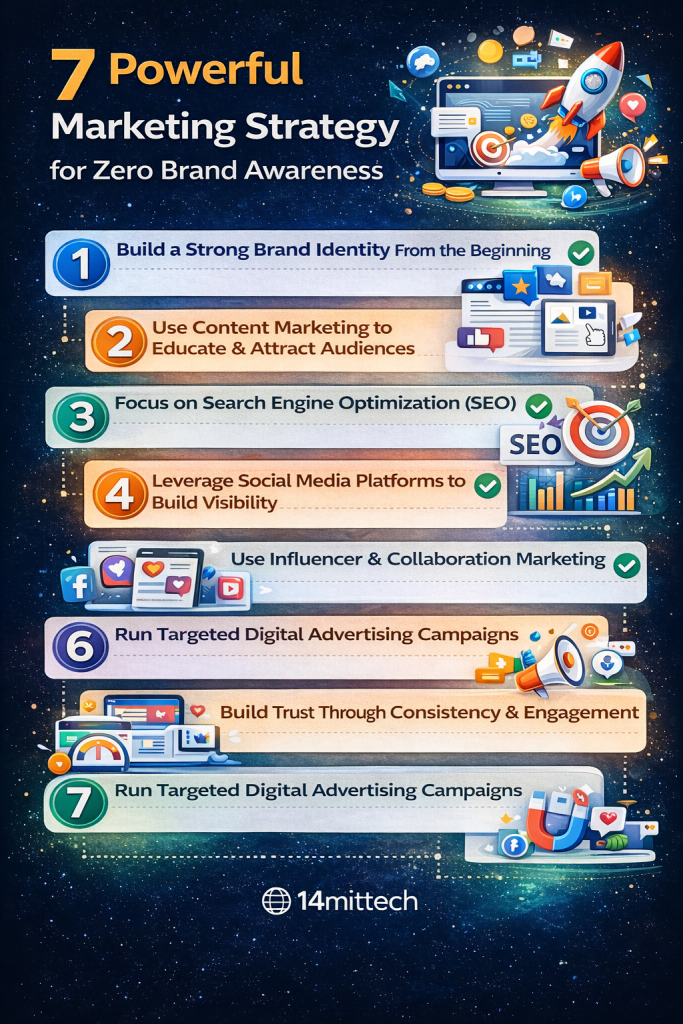
1. Build a Strong Brand Identity From the Beginning
A strong brand identity is the foundation of any successful marketing strategy, especially for businesses that are starting with zero brand awareness. When a company first enters the market, people need to clearly understand what the brand represents, what it offers, and why it exists. This clarity helps potential customers connect with the brand and remember it more easily.
Brand identity includes elements such as the company name, logo, color palette, tone of voice, and overall messaging style. These components work together to create a consistent visual and emotional experience for the audience. When businesses maintain consistency across their website, social media platforms, and marketing materials, they create a recognizable brand image that audiences can quickly identify.
In addition to visual identity, businesses must clearly communicate their value proposition. This means explaining what problem they solve and how their solution is different from competitors. A clear brand message helps audiences understand why they should pay attention to a new company that they have never heard of before.
Developing a strong brand identity also makes future marketing efforts more effective. Once the brand message is clearly defined, every piece of content, advertisement, or campaign can reinforce the same identity, gradually increasing recognition and trust among potential customers.
2. Use Content Marketing to Educate and Attract Audiences
Content marketing is one of the most powerful strategies for brands with zero awareness because it focuses on providing valuable information to potential customers. Instead of directly promoting products or services, businesses create useful content that helps people solve problems, learn new skills, or understand industry topics.
High-quality blog articles, educational videos, and informative social media posts can help attract people who are searching for solutions online. When businesses consistently publish helpful content, they gradually position themselves as trusted sources of information within their industry.
Content marketing also plays a critical role in search engine visibility. By creating articles that target relevant keywords, businesses can appear in search results when users look for related information. Over time, this increases website traffic and exposes the brand to a larger audience.
The key to successful content marketing is consistency. Publishing valuable content regularly ensures that the brand remains visible to audiences and continues to attract new visitors who are discovering the brand for the first time.
3. Focus on Search Engine Optimization (SEO)
Search engine optimization is essential for building awareness when people do not yet know your brand name. Instead of relying on branded searches, businesses must target informational and industry-related keywords that potential customers are already searching for.
SEO involves optimizing website pages, blog content, headings, and meta descriptions so that search engines can clearly understand what the content is about. When pages are optimized correctly, they have a higher chance of appearing in search results and attracting organic traffic.
SEO is particularly valuable for new businesses because it allows them to compete with larger brands through high-quality content rather than large advertising budgets. By focusing on relevant keywords and creating comprehensive articles, businesses can gradually build authority in their niche.
Over time, consistent SEO efforts increase search visibility, allowing potential customers to discover the brand even if they had never heard of it before.
4. Leverage Social Media Platforms to Build Visibility
Social media platforms provide one of the fastest ways to introduce a new brand to a wide audience. Platforms such as Instagram, LinkedIn, and YouTube allow businesses to share content, interact with audiences, and build communities around their brand.
For companies with zero brand awareness, social media can act as a discovery channel where potential customers encounter the brand for the first time. Regular posting, engaging visuals, and informative content can attract attention and encourage people to follow the brand.
Social media also allows businesses to interact directly with their audience. Responding to comments, answering questions, and engaging in conversations can help build relationships and strengthen trust. Over time, these interactions help transform unfamiliar audiences into loyal followers who are more likely to support the brand.
5. Use Influencer and Collaboration Marketing
Collaborating with influencers or industry experts can significantly accelerate brand awareness. When a trusted individual introduces a new brand to their audience, it creates instant credibility and exposure.
Influencers already have established communities that trust their recommendations. When they share or review a product, their audience is more likely to pay attention because the message comes from a familiar source rather than a completely unknown brand.
Partnerships with complementary businesses can also expand brand reach. For example, two companies that serve similar audiences but offer different services can collaborate on content or campaigns to introduce their brands to each other’s audiences.
These partnerships create opportunities for mutual growth while helping new brands reach audiences they might not have been able to access on their own.
6. Run Targeted Digital Advertising Campaigns
Digital advertising can provide immediate visibility for brands that are just entering the market. Platforms such as search engine ads and social media advertising allow businesses to target specific audiences based on interests, location, demographics, and online behavior.
Well-targeted advertising campaigns can introduce a brand to potential customers who are most likely to be interested in the product or service being offered. Even a small advertising budget can generate significant exposure when campaigns are optimized effectively.
Advertising also allows businesses to test different messages, visuals, and offers to see what resonates most with their audience. These insights can then be used to improve future marketing strategies.
7. Build Trust Through Consistency and Engagement
Building brand awareness is not only about visibility but also about trust. People are more likely to support brands that consistently provide valuable information and engage authentically with their audience.
Consistency in messaging, branding, and content helps reinforce brand recognition over time. When audiences repeatedly encounter the same brand across multiple platforms, they begin to remember and trust it.
Engaging with customers through comments, messages, and feedback also strengthens relationships. These interactions demonstrate that the brand values its audience and is willing to listen to their needs.
Businesses that prioritize long-term relationships rather than short-term promotion often develop stronger communities and more loyal customer bases.
FAQs:
1. What is a marketing strategy for zero brand awareness?
It is a structured marketing approach used by new or unknown brands to build visibility, attract audiences, and create recognition in the market.
2. How long does it take to build brand awareness?
Building brand awareness can take several months depending on the consistency of marketing efforts, the competitiveness of the industry, and the effectiveness of the strategy.
3. What is the best channel for brand awareness?
A combination of search engine optimization, content marketing, and social media marketing usually produces the best results for new brands.
4. Can small businesses build brand awareness without a large budget?
Yes. Strategies such as SEO, content marketing, and social media engagement allow small businesses to grow visibility without relying heavily on paid advertising.
Turning Zero Awareness Into Brand Recognition
A successful marketing strategy for zero brand awareness requires patience, consistency, and a clear long-term vision. New businesses must focus on creating valuable content, optimizing their online presence, engaging with audiences, and building trust through meaningful interactions.
When these strategies are implemented together, brands can gradually move from being completely unknown to becoming recognizable and trusted within their industry. Over time, this growing awareness leads to increased website traffic, stronger customer relationships, and sustainable business growth.